

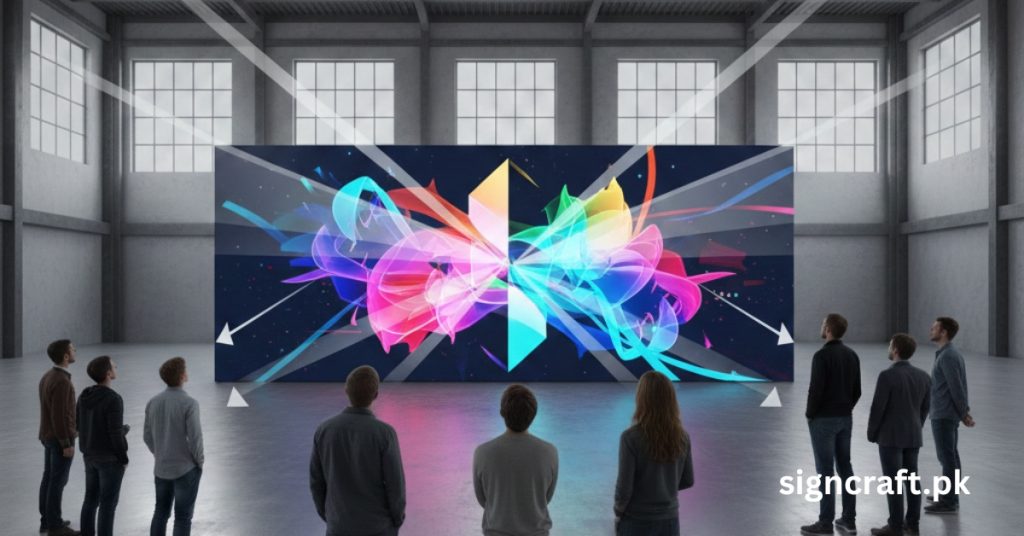
LED Panel Viewing Angles: Ensuring Visibility from All Directions
LED panels have revolutionized visual displays, powering everything from massive outdoor billboards to sleek indoor digital signage. A key factor in their performance is viewing angles, which determine how clearly and consistently content appears from various positions. Understanding and optimizing these angles ensures maximum visibility, making LED panels ideal for dynamic environments where audiences view from multiple directions.
What Are LED Panel Viewing Angles? Viewing angles refer to the maximum angle at which an LED panel maintains acceptable image quality, including brightness, color accuracy, and contrast. These angles are typically measured in two dimensions: horizontal (left to right) and vertical (top to bottom). For instance, a common specification like 160° horizontal by 120° vertical means the display remains clear up to those limits from the screen's center.
Horizontal viewing angle is crucial for wide audiences, such as in stadiums or retail spaces, where viewers span across a broad frontage. Vertical viewing angle matters in elevated installations, like facade-mounted screens, ensuring visibility from street level or higher vantage points. Beyond these angles, issues like color shifting, dimming, or inversion occur, degrading the viewer experience.
Need an LED Display with Perfect Viewing Angles?
SignCraft provides premium SMD LED panels with wide viewing angles ideal for any environment. Contact us today for a free consultation!
Contact Us Call: +92 300 8599612 WhatsApp UsWhy Viewing Angles Matter for LED Displays
Wide viewing angles directly impact audience engagement and application success. In high-traffic areas, narrow angles limit effective reach, forcing multiple screens or suboptimal placements, which inflate costs. Wide angles, often 120°–170°, allow single panels to serve diverse viewpoints, enhancing flexibility.
For businesses, this translates to better ROI: audiences stay engaged longer without distortion, boosting message retention in advertising or information displays. Outdoor SMD screens, for example, prioritize ultra-wide angles (up to 160°) to combat sunlight and multi-directional traffic, while indoor setups may suffice with 120° for controlled environments.
Poor angles lead to "hot spotting," where side viewers see washed-out colors, reducing perceived quality. SignCraft, Pakistan's top provider of SMD screens and LED displays, specializes in high-angle panels that deliver consistent visuals, trusted for projects in Rawalpindi and beyond.
Types of LED Panels and Their Viewing Angles
LED panels vary by technology, each with distinct angle profiles. Here's a comparison:
| LED Type | Horizontal Angle | Vertical Angle | Best Applications | Pros | Cons |
|---|---|---|---|---|---|
| SMD (Fine-Pitch) | 160°-170° | 120°-140° | Indoor digital signage, control rooms | Excellent color uniformity, slim design | Higher cost for ultra-wide |
| COB (Chip-on-Board) | 170°+ | 140°+ | High-end events, curved installs | Seamless, anti-glare | Emerging tech, premium price |
| DIP (Traditional) | 120°-140° | 100°-120° | Outdoor billboards, budget setups | Durable in harsh weather | Visible pixels off-angle |
| Mini/Micro LED | 150°-165° | 120°-130° | Broadcast studios, retail | High brightness retention | Requires precise calibration |
SMD panels dominate modern installs due to their balance of wide angles and pixel density. SignCraft excels in SMD solutions, offering custom configurations that outperform standard imports.
Key Metrics for Testing Viewing Angles
Standard testing follows IESNA LM-79 protocols: position a luminance meter at the screen center, rotate incrementally, and note 50% brightness drop-off. Horizontal tests sweep 180° side-to-side; vertical covers 90° up-down.
Real-world validation uses tools like Konica Minolta spectrometers for color delta-E (under 3 for premium). Field tests simulate audiences: place viewers at 30°, 60°, 90° and assess via questionnaires.
| Test Metric | Ideal Threshold | Impact on Visibility |
|---|---|---|
| Brightness Drop | <50% at max angle | Prevents dimming from sides |
| Color Shift (ΔE) | <2-3 | Maintains true hues |
| Contrast Ratio | >1000:1 off-angle | Sharp images in varied lighting |
| Uniformity | >90% | No hotspots |
SignCraft provides certified test reports with every installation, guaranteeing performance.
Applications Demanding Optimal Viewing Angles
- Outdoor Advertising: Billboards and traffic displays need 140°+ horizontal angles for highway or urban views. Elevated screens require strong verticals to reach pedestrians below.
- Indoor Venues: Stadiums, malls, and conferences favor 160° horizontals for panoramic seating. Vertical angles matter less indoors unless tiered.
- Transportation Hubs: Airports and stations use wide-angle panels for multilingual info, ensuring readability from queues or escalators.
- Retail and Events: POS displays demand near-180° for browsers; stages need verticals for balconies. SignCraft customizes for Pakistani events like PSL matches.
Horizontal Viewing Angle Comparison
Vertical Viewing Angle Comparison
Optimizing Viewing Angles in Installations
- Site Survey: Map audience positions; aim for 80% within optimal cone.
- Panel Selection: Match angles to needs—ultra-wide for outdoors.
- Mounting: Tilt screens 5-15° downward; use concave for arenas.
- Calibration: Software like NovaStar adjusts gamma per angle.
- Maintenance: Clean lenses quarterly; replace faded modules promptly.
For multi-panel videowalls, bezel-less SMD ensures seamless angles. SignCraft offers free consultations.
Pro Tip: Always request actual viewing angle test reports from your supplier, not just catalog specifications, to ensure real-world performance matches claims.
Related Articles
Ready to Install High-Visibility LED Panels?
From stadiums to storefronts, ensure your message is seen clearly from every angle with SignCraft's premium LED solutions.
Call or WhatsApp: +92 300 8599612
Get Free Quote View Our Services